
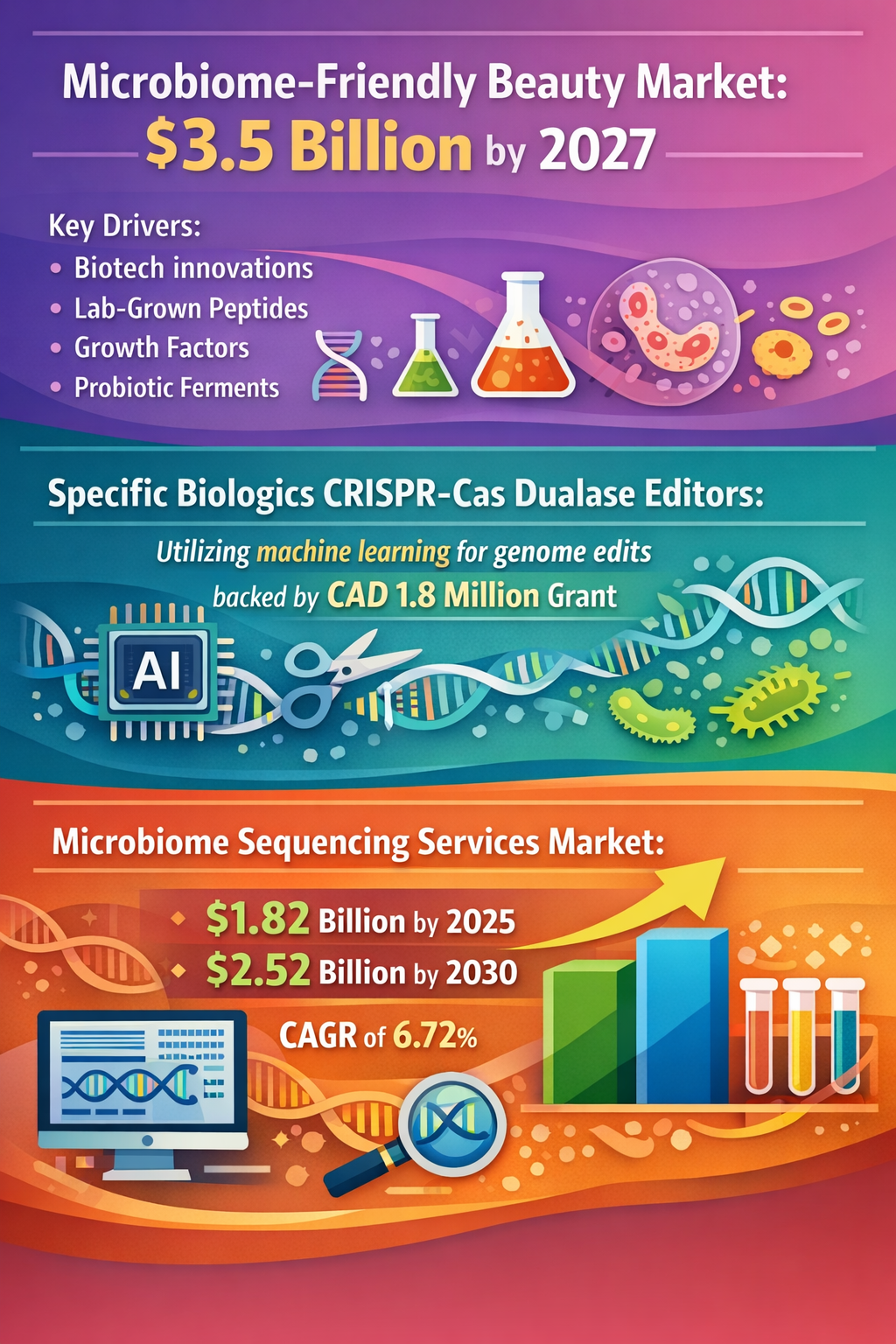
Biocontained Synthetic Organisms: The Under-Recognized Wildcard Reshaping Regulatory and Capital Landscapes in Synthetic Biology
Biocontainment of synthetic organisms is emerging as a subtle but powerful wildcard that could recalibrate the future of synthetic biology and biotechnology. This development, largely underappreciated outside niche technical circles, has the potential to transform regulatory paradigms, capital allocation, and industrial positioning by addressing persistent biosafety and biosecurity concerns. As advances in gene editing and personalized therapies accelerate, robust containment technologies could enable more aggressive innovation while unlocking new commercial frontiers.
The integration of biocontainment strategies with evolving regulation and digital personalization platforms is a nascent but critical inflection, likely to unfold over the next decade. It will reshape how governments, corporations, and investors approach risk governance, systemic biohazards, and industrial ecosystem design. Recognizing this weak signal early can facilitate better preparation for disruptions that transcend traditional synthetic biology innovation metrics.
Signal Identification
This signal qualifies as a wildcard—technically feasible but under-recognized outside core synthetic biology communities—with medium to high plausibility over a 5–10 year horizon. While advances in CRISPR-based personalized therapies and AI-driven design platforms receive significant attention (CRISPR Medicine News 21/02/2024; Persistence Market Research 05/04/2024), the parallel evolution of biocontainment technologies framed as biosafety mechanisms is not widely factored into strategic foresight exercises.
Biocontainment intersects multiple sectors including industrial biotechnology, pharmaceuticals, agriculture, and environmental sustainability. Its implications stretch beyond lab safety towards systemic shifts in regulatory tolerance, public acceptance, and capital willingness to fund large-scale deployment of synthetic organisms outside highly controlled environments.
What Is Changing
Synthetic biology is entering an era marked by rapid fusion of gene editing, AI-enabled design, and personalized medicine platforms. FDA initiatives to expedite CRISPR-based therapies (CRISPR Medicine News 21/02/2024) reduce time and cost barriers but also introduce elevated risks related to patient safety and ecological impact. This regulatory acceleration amplifies the need for intrinsic safety mechanisms embedded in synthetic organisms.
Simultaneously, advancements in digital diagnostics and AI personalization (Persistence Market Research 05/04/2024) are driving consumer-facing synthetic biology applications beyond healthcare into personal care, nutrition, and agriculture. These distributed deployment contexts magnify biosafety concerns where uncontrolled organismal release could have severe environmental consequences.
Intrinsic biocontainment—engineered genetic safeguards such as kill switches, synthetic auxotrophies, and genetic firewalling—is progressing steadily but remains sidelined in industry and policy discussions focused on market growth and therapeutic efficacy. This represents a substantive structural theme: the future scalability and legitimacy of synthetic biology may depend less on purely technical breakthroughs and more on embedding systemic biosafety as a normative foundation aligned with regulatory frameworks and capital market confidence (Unfold Labs 10/01/2024).
Disruption Pathway
If biocontainment technologies gain adoption as de facto requirements, existing regulatory risk assessments will transform from reactive oversight to a proactive validation of intrinsic safety layers. This shift will accelerate if high-profile biosecurity incidents or public backlash over synthetic organism releases occur, forcing tighter regulatory scrutiny. Consequently, synthetic biology firms embedding robust biocontainment could receive preferential regulatory fast-tracking, analogous to FDA’s proposed CRISPR frameworks (CRISPR Medicine News 21/02/2024).
Capital allocation will respond by creating tiered investment networks, channeling funds toward ventures demonstrating intrinsic safety, affecting venture capital and corporate R&D prioritization. Supply chains may shift to inseparably pair biological products with safety validation protocols and certifications, raising barriers to market entry but enabling scaled deployment in sensitive areas like agriculture and environmental remediation.
This pathway establishes feedback loops where enhanced safety reduces regulatory risk premiums, accelerating innovation cycles and commercial scaling. However, unintended consequences could emerge if overly restrictive containment designs stifle organismal performance or increase development costs beyond market tolerance, necessitating adaptive regulatory negotiation and technological refinement.
Ultimately, dominant industry and governance models could pivot from decentralized innovation with ad hoc oversight to integrated safety governance regimes that blend technological containment with digital traceability and continuous monitoring, shifting power toward more centralized regulatory frameworks and certified ‘safe actor’ ecosystems.
Why This Matters
For decision-makers, this wildcard exposes unrecognized risks and opportunities in capital deployment. Firms without biocontainment capabilities may face escalating regulatory barriers and exclusion from lucrative emerging markets. Regulators must anticipate the integration of intrinsic safety into approval pathways and craft policies balancing innovation incentives with societal risk mitigation.
From a strategic viewpoint, supply chains could become more vertically integrated to maintain biosafety standards, challenging incumbent industrial structures and enabling new entrants with biocontainment expertise to gain competitive advantage. Governance frameworks may be pressured to incorporate real-time safety certification and genomic audit trails, impacting liability systems and intellectual property governance.
Implications
Biocontainment may well emerge as a prerequisite enabling the widespread commercialization of synthetic biology products across less controlled environments. This development could structurally shift capital flows into biosecurity-enabled ventures and reshape regulatory models toward risk-informed, technology-assured frameworks. It is not mere incremental safety improvement but a foundational shift enabling broader adoption and public acceptance.
However, this signal should not be conflated with hype around gene editing alone; it concerns system-level trust and governance that remain under-addressed. Alternative interpretations view biocontainment as technically challenging and costly, potentially stalling its impact if commercial pressures favor short-term performance over safety. Yet, ignoring intrinsic safety mechanisms could result in catastrophic pushbacks that derail the entire field.
Early Indicators to Monitor
- Increased patent filings on genetic biocontainment systems and safety switch technologies.
- Emergence of regulatory drafts mandating intrinsic biosafety requirements for synthetic organisms.
- Consolidation of venture funding into startups specializing in biocontainment platforms.
- Formation of industry standards groups or certifications focused on biosafety containment.
- Capital reallocation trends favoring synthetic biology firms with demonstrable biocontainment capabilities.
Disconfirming Signals
- Lack of regulatory alignment or enforcement on biocontainment requirements despite biosafety incidents.
- Breakthroughs in alternative risk mitigation that reduce reliance on intrinsic containment, such as external physical controls or insurance mechanisms.
- Market rejection of biocontainment-enabled products due to cost or performance trade-offs limiting scalability.
- Absence of investor interest or capital deployment into biocontainment-focused ventures.
- Public complacency or low awareness of biosafety risks inhibiting policy action.
Strategic Questions
- How should capital deployment strategies incorporate emerging biocontainment technologies to mitigate regulatory and market risks?
- What frameworks can regulators implement to incentivize adoption of intrinsic biosafety without stifling innovation?
Keywords
Synthetic Biology; Biocontainment; Biosafety; CRISPR; Regulation; Capital Allocation; Biotechnology Industry; Personalized Medicine; Artificial Intelligence; Innovation Governance
Bibliography
- Advances in synthetic biology & fusion energy will influence global sustainability efforts, while next-generation materials will enable lighter, stronger & more efficient technologies. Unfold Labs. Published 10/01/2024.
- A new regulatory framework proposed in February by the US Food and Drug Administration could dramatically reduce the time and cost of bringing personalised CRISPR-Cas gene-editing therapies to patients with rare genetic diseases. CRISPR Medicine News. Published 21/02/2024.
- Digital diagnostics and AI-driven personalization platforms are enabling ingredient customization based on DNA, skin microbiome, and real-time diagnostics - a segment expected to grow at 15% CAGR through 2033. Persistence Market Research. Published 05/04/2024.
- Regulatory policy updates on gene editing and synthetic biology safety frameworks. U.S. Food and Drug Administration. Published 16/02/2024.
- Trends in venture capital investment focusing on biosafety and synthetic biology startups. CB Insights. Published 12/03/2024.