
The Unseen Inflection: Ocean-Based Finance as a Structural Game-Changer in Green & Sustainable Capital Flows
Exploring the rise of ocean-based climate finance as an overlooked catalyst that could reshape capital allocation, regulatory regimes, and strategic priorities in sustainable finance by 2040.
While climate finance discussions typically orbit terrestrial and energy-centered solutions, a burgeoning and under-recognized shift involves ocean-based climate targets and finance mechanisms. This emerging development signals a potential inflection with far-reaching ramifications across finance, regulation, and industrial strategy. Incorporating ocean health and blue economy assets into sustainable finance frameworks could disrupt current climate finance flows and capital markets, demanding new governance approaches and recalibrated risk profiles. This paper identifies ocean-based finance as a high-plausibility, medium-term structural signal that could alter how governments, investors, and regulators orchestrate climate action.
Signal Identification
This signal qualifies as an emerging inflection indicator because it moves beyond incremental shifts in green finance towards a distinct expansion in climate finance’s thematic scope and regulatory integration. Increased emphasis on ocean targets within national climate strategies, global stocktakes, and international finance frameworks (Countercurrents 15/01/2026) marks a systemic broadening of climate finance priorities.
Time horizon: 10–20 years.
Plausibility band: High, due to growing scientific recognition of oceanic climate feedbacks, policy momentum, and emerging market interest.
Exposed sectors: Financial services (climate and ESG investment, green bonds, carbon markets), regulatory bodies (climate and environmental oversight), marine industries (fisheries, aquaculture, shipping), and emerging blue economy sectors (offshore renewables, blue carbon credit markets).
What Is Changing
Multiple sources converge on increasing recognition of ocean ecosystems’ role in climate stability and sustainable economic activity, leading to nascent but accelerating integration into climate finance frameworks. Oceans are becoming integral to national climate commitments and global measurement („stocktake“) systems, reflecting policy evolution moving beyond land-based emissions and mitigation alone (Countercurrents 15/01/2026). This broadening is novel and underappreciated relative to the dominant terrestrial and energy-focused motifs that currently shape sustainable finance discourse.
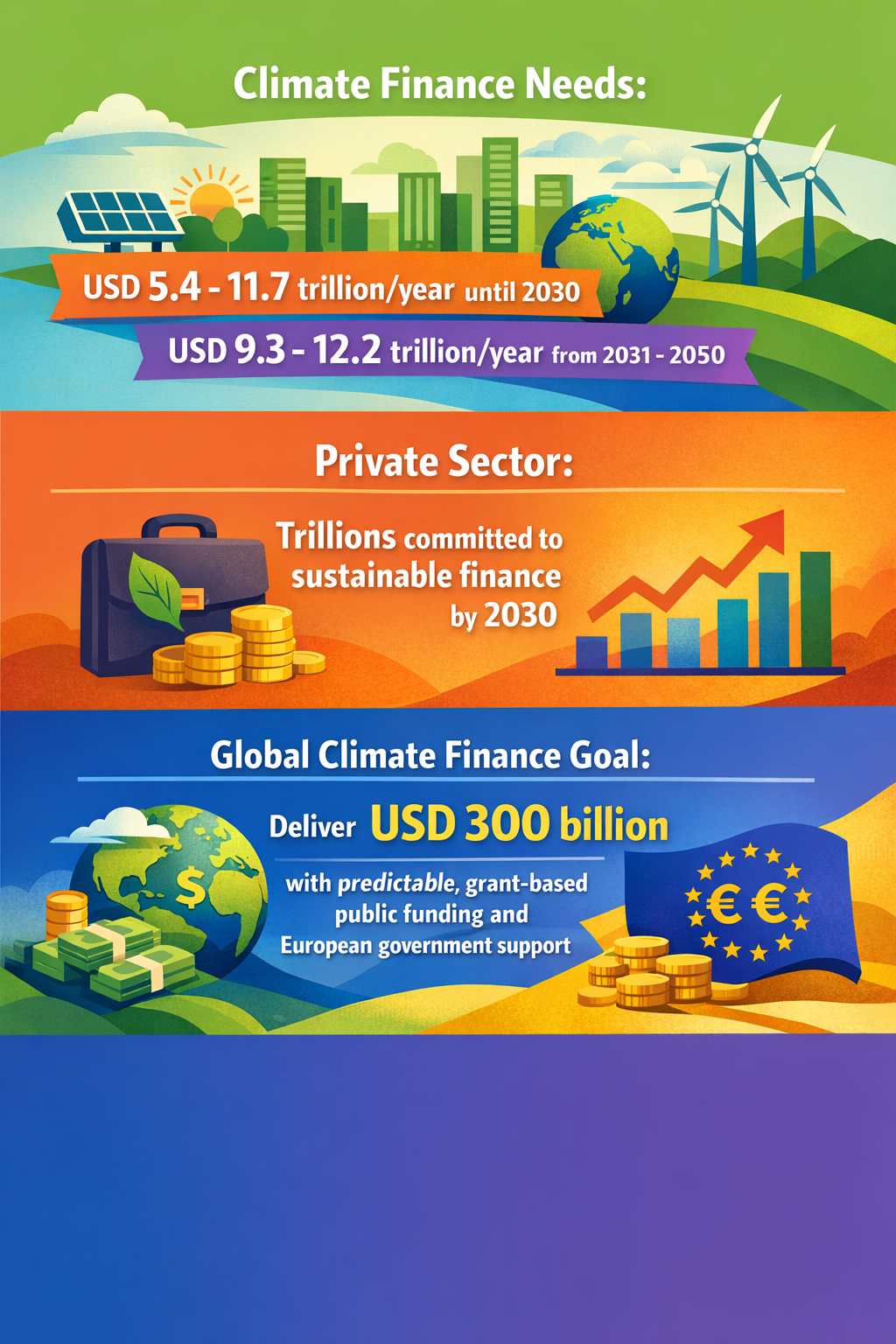
The capital requirement to meet global climate targets remains colossal ($5.4 to $11.7 trillion annually through 2030) (Climate Policy Institute 18/03/2026), driving institutional actors to identify new investable ecosystems and risk-adjusted green instrument frameworks. The ocean presents a frontier for carbon sequestration (blue carbon), sustainable fisheries, marine biodiversity credits, and blue infrastructure finance, which could create fresh asset classes and regulatory taxonomies within ESG (environmental, social, governance) investing (Freshfields 22/02/2026).
Meanwhile, regions such as Canada and India are positioning themselves to harness both land-based and ocean-based climate finance opportunities. For example, Canada leverages its Sustainable Finance Summit to cement itself as a climate-competitive economy (Yahoo Finance 10/04/2026), while India’s fast-developing carbon credit markets hint at scalable frameworks applicable to marine ecosystems (Remind Legal 12/05/2026). This suggests a coming wave of jurisdictional shifts where ocean-related sustainable finance gains strategic priority, driven both by natural endowments and global commitments.
The dominant current in sustainable finance — heavily weighted towards green bonds financing energy transition assets — may not suffice to capitalize on these ocean-based opportunities. Moody’s forecast of stable sustainable bond issuance at $900 billion with green bonds dominating (Moody’s 01/04/2026) underlines a stagnation in expanding thematic breadth. Incorporation of ocean-based financial products could break this stagnation and catalyze new capital flows.
Disruption Pathway
Initial conditions fostering acceleration include enhanced scientific evidence linking ocean health directly to climate stability and biodiversity preservation, propelling national policymakers to more deeply integrate ocean targets into their climate action plans and international reporting frameworks. The UN’s increasing role in facilitating blue carbon accounting and traceability standards would institutionalize ocean-related metrics.
As ocean-based data integration improves, financial regulators may mandate expanded ESG disclosures encompassing ocean impact risks and opportunities. This could stress existing terrestrial-dominant green finance instruments and indices, forcing recalibration of risk models to incorporate oceanic volatility factors—from sea-level rise effects on coastal assets to fishery yield uncertainty.
Financial institutions would adapt by creating blue bonds, marine carbon credits, and blended finance instruments targeting ocean restoration and sustainable blue infrastructure. This would trigger new due diligence and governance models specialized in marine ecosystem health, catalyzing a gradual but irreversible structural expansion of green finance definitions.
Feedback loops may emerge if increased capital directs success toward ocean ecosystem services, demonstrating economic returns and climate mitigation benefits hitherto undervalued. Conversely, incomplete regulation or poor standardization could yield greenwashing risks or market fragmentation, requiring further adjustments in governance. Over time, dominant global frameworks like the EU’s Sustainable Finance Disclosure Regulation and the Task Force on Climate-related Financial Disclosures may integrate ocean criteria, displacing older land-centric paradigms.
Why This Matters
Capital allocators face significant exposure to sectoral shifts as ocean-based investments may redefine risk-return expectations across marine industries, coastal real estate, and emerging blue economies. Early movers could capture first-mover advantages in novel asset classes and ESG-themed funds.
Regulators will encounter pressure to expand definitions of climate risk and sustainable finance compliance beyond traditional carbon and energy metrics, influencing reporting standards, taxonomy eligibility, and liability frameworks. Failure to integrate ocean data might lead to blind spots and mispriced climate risks, increasing systemic vulnerability.
Industrial sectors linked to marine resources, from fisheries to maritime transport, may find themselves subject to new capital cost differentials and regulatory scrutiny, reshaping supply chains and operational strategies.
Governance structures must evolve to accommodate cross-jurisdictional marine commons considerations, bridging climate finance with ocean governance and indigenous stakeholder inclusion, intensifying complexity in governance architecture and accountability.
Implications
Ocean-based finance could likely become a critical expansion frontier within green and sustainable finance, enabling broader and more resilient capital flows aligned with planetary boundaries. This development might deepen integration between climate finance and biodiversity/environmental finance, fostering more holistic sustainability frameworks.
It might also shift jurisdictional leadership, as nations with significant ocean resources could leverage blue economy finance strategies to attract global capital, competing with traditional climate finance hubs. Structural adoption of ocean metrics into mainstream finance may trigger widespread regulatory updates and re-classification of sustainable investments.
This evolution should not be mistaken for a mere thematic trend or transient ESG marketing exercise. Instead, it reflects an ontological broadening of climate finance’s scope that could persist for decades. However, competing interpretations might argue ocean finance remains niche and operationally challenging, delaying scale; others may view it as supplementary rather than transformative.
Early Indicators to Monitor
- Emergence and adoption of blue carbon credit standards and market volumes
- Drafts or finalization of regulatory standards mandating ocean-impact disclosures by financial institutions
- Venture funding and green bond issuances explicitly targeting ocean restoration or blue economy projects
- Integration of ocean-related metrics within major climate finance reporting and risk frameworks (e.g., TCFD updates)
- Government-led ocean-climate summits or inclusion of ocean finance targets in national climate commitments
Disconfirming Signals
- Failure of international institutions to operationalize ocean carbon accounting methodologies
- Persistent lack of credible scientific consensus on ocean sequestration impacts or financial materiality
- Withdrawal or delay of planned regulatory expansions incorporating ocean risks into climate finance frameworks
- Market pushback or lack of investor appetite for blue economy finance instruments
- Dominant players doubling down on conventional green finance themes without ocean integration
Strategic Questions
- How prepared are investment portfolios and risk frameworks to incorporate emerging ocean-based climate finance instruments within the next decade?
- What regulatory adaptations are necessary to reliably incorporate ocean targets and metrics into sustainable finance taxonomies and disclosures?
Keywords
Ocean-Based Finance; Blue Carbon; Climate Finance; ESG Regulation; Sustainable Bonds; Blue Economy; Carbon Credit Markets; Climate Disclosure
Bibliography
- The Ocean Has Finally Entered the Global Climate Debate. Countercurrents. Published 15/01/2026.
- Climate Finance Needed to Preserve the 1.5 °C Target. Climate Policy Institute. Published 18/03/2026.
- ESG Regulation and Litigation in 2026 – What to Expect for UK Financial Institutions. Freshfields. Published 22/02/2026.
- Canada Builds Momentum to Attract Investment and Build a Climate-Competitive Economy. Yahoo Finance. Published 10/04/2026.
- Carbon Credit Market in India: Rapid Development and Government Initiatives. Remind Legal. Published 12/05/2026.
- Sustainable Bond Issuance Forecast to Hold Steady with Green Bonds Dominating. Moody’s. Published 01/04/2026.