
Invisible Thermo-Spatial Traps: The Emerging Urban Heat Resilience Gap in Megacities
Rising extreme urban heat, exacerbated by rapid urbanization and climate change, is creating spatially and socioeconomically variable “thermo-traps” in megacities—zones of persistent, compounding heat stress that are inadequately addressed by mainstream smart city or infrastructure investments. This weak signal of fragmented urban thermal resilience could structurally realign urban governance, capital flows, and adaptive infrastructure strategies in the coming decades.
Rapid urbanization in Asia-Pacific, ASEAN, and the Middle East is increasing heat exposure risk, but current smart city developments prioritize technology deployment with uneven institutional readiness, creating pockets of escalating vulnerability. This unevenness represents a growing urban heat resilience gap rarely recognized in urban futures discourse. The emergence of passive cooling frameworks, AI-driven smart city water management, and regional inequalities in infrastructure modernization combine to create a potentially disruptive inflection point in how megacities must recalibrate their built environments, social policies, and economic strategies towards inclusive, thermo-spatial equity.
Signal Identification
This is an emerging inflection indicator that exposes a systemic fragment in the urbanization paradigm: the creation of spatial “thermo-traps” or urban heat islands with inseparable social, economic, and infrastructural implications. This phenomenon is not widely recognized beyond its climatic or environmental framing—its embeddedness in urban governance models and capital flows remains under-acknowledged.
It qualifies as an inflection sign because rising extreme heat days—up to 120 days above 35°C predicted in ASEAN by 2050—and uneven deployment of urban cooling and smart management technologies suggest a bifurcation in urban liveability and economic productivity within megacities (ASEAN Energy 14/06/2023; Capgemini 22/02/2026).
Time horizon: Medium to long term (10–20 years). Plausibility band: High, given climate trends and investment patterns. Sectors exposed: Urban real estate, infrastructure finance, public health, energy, insurance, urban planning, and governance structures.
What Is Changing
The Asia-Pacific region is experiencing explosive urbanization that drives infrastructure investment but also intensifies extreme heat risk. ASEAN’s projection of temperatures above 35°C potentially affecting the region for 120 days per year indicates a severe environmental stressor with cascading health, productivity, and energy demands (ASEAN Energy 14/06/2023).
Simultaneously, the surge in smart city initiatives—valued at $3.5 trillion globally—is increasingly differentiated by institutional readiness rather than pure technological capability. Cities with weaker governance or fragmented authority struggle to translate smart technology into adaptive urban systems, creating pockets of under-served communities vulnerable to heat stress (Capgemini 22/02/2026).
Digital modernization in emerging megacities, such as biometric IDs and surveillance infrastructure in Kenya, highlights a broader tension between tech-enabled control and social equity in urban settings; these initiatives may partially exacerbate or mask spatial thermal inequities (Princeton Journal 09/11/2025).
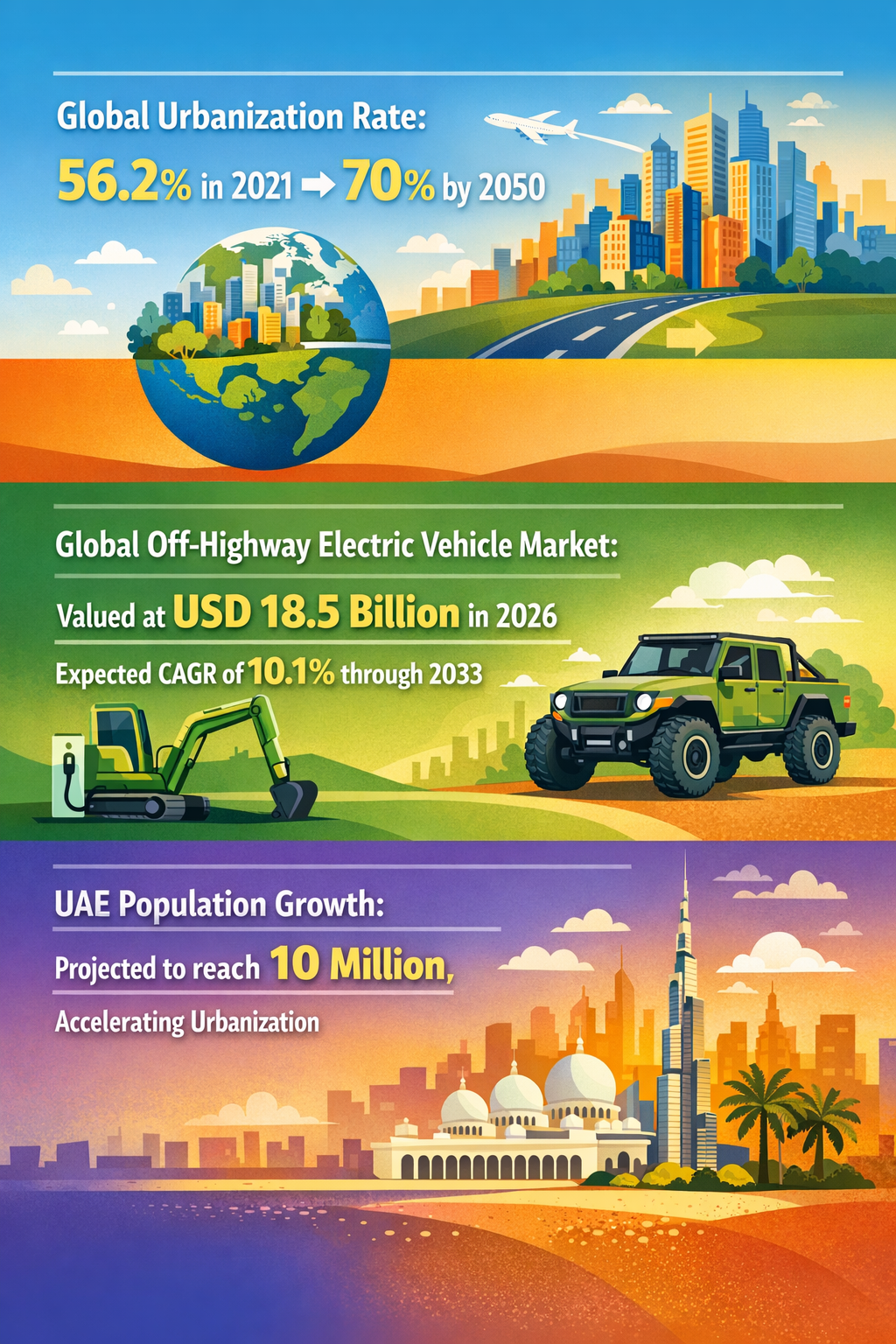
In the Gulf, specifically the UAE, population growth and urbanization accelerate demand for retrofitting and cooling, pressing the need to integrate AI-based smart city water management platforms and disaster response to tackle thermal extremes effectively (Yahoo Finance 17/03/2026; CoinGeek 11/04/2026).
Infrastructure build-outs predominantly focus on energy and digital networks supporting urban growth but often neglect passive cooling or thermal resilience as a systemic element. This misalignment between rapid urban expansion and climate adaptation frameworks foregrounds a structural gap in urban resilience planning and capital allocation (PwC 12/01/2026; Brightpath Associates 08/09/2026).
Disruption Pathway
Increasingly frequent and severe urban heat days trigger widespread health systems strain, lowering economic productivity and pushing utility consumption spikes that stress energy grids. These conditions act as accelerants, pressuring governments to confront spatial thermal inequalities as political and social flashpoints emerge.
Where smart cities are built on uneven governance, technology deployment compounds disparities, creating “heat ghettos” with diminished liveability and economic prospects. Financial markets may begin to differentiate real estate and infrastructure valuations based on granular thermo-spatial risk data, shifting capital allocation away from vulnerable areas and prompting calls for new regulatory frameworks requiring thermal risk disclosure.
Urban planners and developers might adopt standards mandating passive cooling integration and adaptive water management as core infrastructure requirements rather than ancillary benefits. The adaptive response loop may extend beyond physical measures to encompass socio-economic policy instruments, such as subsidized cooling for marginalized populations and revised zoning codes prioritizing thermal equity.
This evolution threatens incumbent urban management practices centered on infrastructure expansion and tech-enabled governance dominance, creating openings for new institutional models emphasizing decentralized, community-informed resilience strategies. A feedback loop arises where data-driven insights into heat vulnerability reinforce more sophisticated, localized adaptation technologies combined with responsive governance.
The shift may destabilize existing real estate, insurance, and energy sector norms by imposing systemic climate resilience obligations, challenging legacy investment and regulatory models and transforming urban industrial structures.
Why This Matters
Senior decision-makers face mounting exposure across real estate portfolios, critical infrastructure, public health systems, and urban service delivery. Failure to integrate emerging thermo-spatial resilience weaknesses could trigger capital flight, increased insurance liability, and growing social unrest.
Policy frameworks may need recalibration from mere emissions or generalized sustainability regulations to nuanced spatial thermal resilience mandates that transcend jurisdictions and governance domains. Strategic investors might reorient capital toward retrofit markets, smart thermal management infrastructure, and urban design firms specializing in passive cooling technologies.
Competitively, cities and industries that ignore granular thermal risk heterogeneity risk losing human capital and production efficiencies, undermining long-term economic positioning. Supply chains aligned with construction, building materials, and electric vehicle infrastructure must factor in differential thermal vulnerabilities influencing deployment priorities and robustness.
Governance risks include liability exposure from uneven adaptation responses, requiring integrated heat risk assessments embedded within urban development approvals and insurance underwriting.
Implications
This weak signal could evolve into a widespread structural paradigm whereby urban liveability is formally reframed in terms of thermo-spatial equity, driving new capital and regulatory architectures that may re-divide urban economic geography. It could catalyse a shift from linear "smart city" technology rollouts toward deeply localized, adaptive resilience models that couple passive environmental design with AI-driven management systems.
It is unlikely to be a transient or localized noise; instead, it reflects accumulating systemic stress exacerbated by climate change and uneven governance capacity. However, it should not be mistaken for a generic “climate risk” narrative—its specificity lies in the fragmentation of urban heat resilience that existing frameworks inadequately capture.
Competing interpretations might emphasize technological optimism, arguing that advancing AI and connected systems alone will resolve thermal stress disparities. Yet, current evidence suggests institutional readiness and governance maturity critically limit technology’s transformative potential (Capgemini 22/02/2026).
Early Indicators to Monitor
- Increasing urban insurance claims and underwriting conditions tied to heat-related losses in megacities
- Regulatory drafts mandating urban thermo-spatial risk assessments and resilience standards
- Venture funding clustering on passive cooling technologies, urban heat mapping platforms, and adaptive water management software
- Capital reallocations away from real estate in high heat vulnerability zones
- Formation of urban resilience governance frameworks with explicit focus on equitable thermal adaptation
Disconfirming Signals
- Breakthrough, affordable climate-controlled urban envelopes that render passive or adaptive thermal management obsolete
- Decisive governance consolidation that effectively equalizes smart city institutional capacity across regions, eliminating fragmented deployment risk
- Rapid decarbonization and greening initiatives driving significant urban microclimate cooling faster than heat stress escalation
- Large-scale demographic outmigration from megacities significantly reducing urban heat exposure and economic risk
Strategic Questions
- How can urban infrastructure investment strategies proactively integrate thermo-spatial risk to avoid future stranded assets?
- What policy and governance adaptations are necessary to mandate and enable equitable urban heat resilience across socio-economic groups?
Keywords
Urbanization; Megacities; Urban Heat Resilience; Passive Cooling; Smart Cities; Climate Adaptation; Urban Governance; Capital Allocation
Bibliography
- Driven by rapid urbanization, ASEAN could face up to 120 days per year with temperatures above 35 °C by 2050... ASEAN Energy. Published 14/06/2023.
- While the market for smart city solutions continues to surge toward a projected $3.5 trillion... Capgemini. Published 22/02/2026.
- In Kenya, digital transformation initiatives including biometric identification systems, smart city surveillance infrastructure... Princeton Journal of Public and International Affairs. Published 09/11/2025.
- The global off-highway electric vehicle market was valued at USD 18.5 billion... Persistence Market Research. Published 12/01/2026.
- Asia-Pacific will remain the engine of global infrastructure activity, accounting for more than half of total investment... PwC. Published 12/01/2026.
- In Brunei, MOLIT, with support from local authorities in the oil-rich country, will leverage AI... CoinGeek. Published 11/04/2026.
- In Asia, the scale of urbanization will drive capacity additions alongside efficiency upgrades and consolidation... Brightpath Associates. Published 08/09/2026.
- Rising Urbanization and Population Growth: The UAE’s population is projected to reach 10 million... Yahoo Finance. Published 17/03/2026.