Global Scans
·
Space
·
Intelligence Briefing
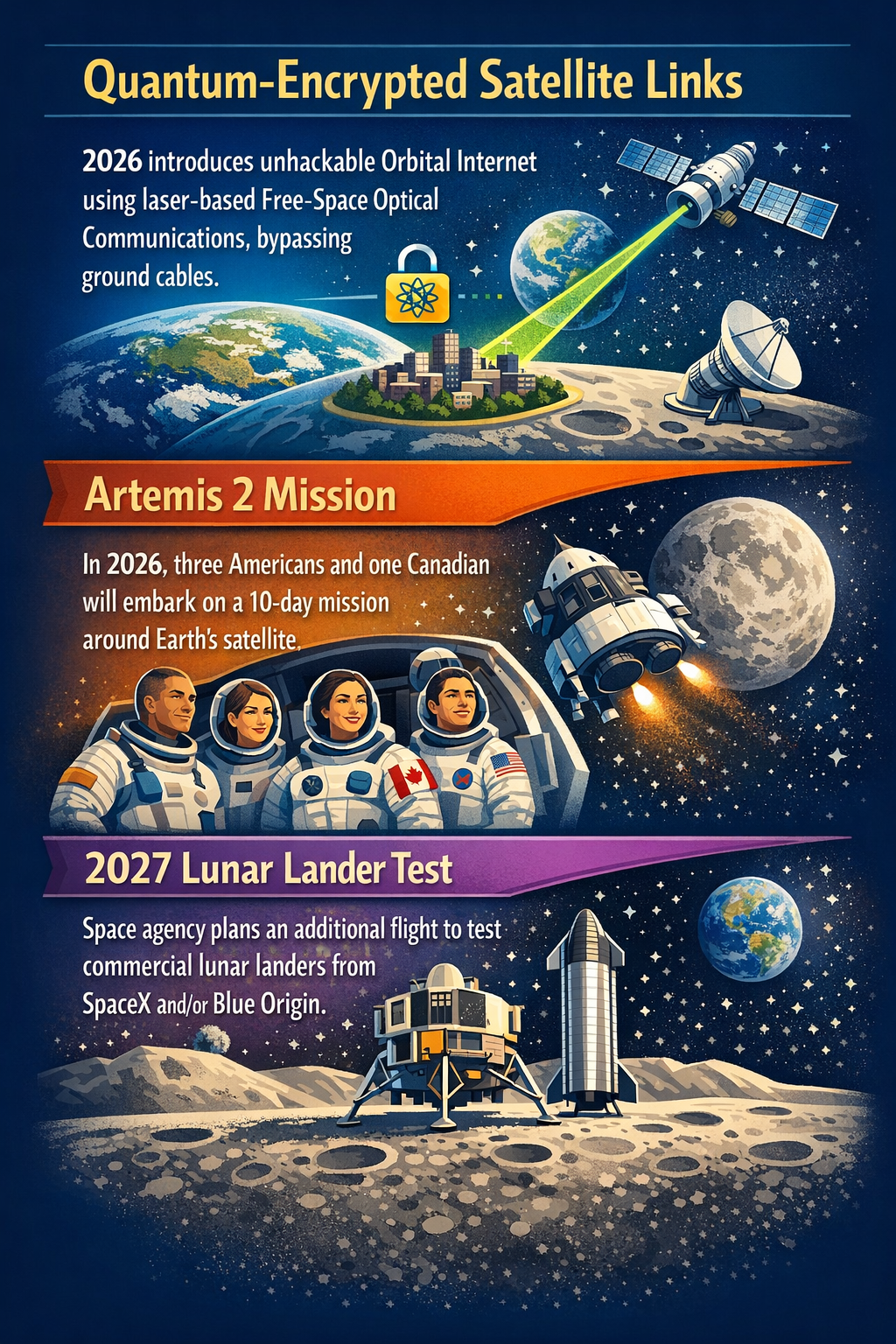
Intelligence Briefing about Space
Critical Trends Impacting the Organization
- Quantum-Encrypted Satellite Communications: The emergence of laser-based free-space optical links aiming to establish secure, quantum-resistant orbital internet networks by 2026 (Mexc News).
- Advancements in Lunar Missions and Commercial Participation: Artemis program delays to 2028 with increased involvement of private firms like SpaceX and Blue Origin in lunar lander development and private astronaut missions (Engadget, Tech Startups).
- Proliferation of LEO Satellite Constellations: Deployment of low Earth orbit satellites to enhance navigation, communication accuracy, and reliability, especially in challenging environments (Construction Briefing).
- Integration of AI with Space Exploration and Infrastructure: Increasing investments in AI-driven space ventures, including AI satellites manufactured on lunar facilities and data centers in orbit (CW English, ETC Journal, Fortune).
- Expanding Market for Space Probes and Rovers: Anticipated rapid growth in exploratory and robotic spacecraft sectors between 2026 and 2035 (Precedence Research).
Key Challenges, Opportunities, and Potential Risks
- Challenges:
- Technical setbacks and delays, exemplified by Artemis II’s launch postponements due to hardware issues (MyNews13).
- Security vulnerabilities in traditional satellite communication approaches necessitating quantum-resilient technologies.
- Complexities of integrating AI with space operations, including regulatory and ethical concerns.
- Dependence on private sector pace and funding stability for mission success and infrastructure development.
- Opportunities:
- Establishing a secure, orbital internet using quantum-encrypted satellite links to revolutionize global communications.
- Commercial lunar landers and private astronaut missions expand market participation and innovation.
- LEO constellations delivering enhanced navigation and connectivity services worldwide.
- Orbital data centers and lunar manufacturing offer potential for sustainable extraterrestrial infrastructure and industrialization.
- Risks:
- Poor coordination between governmental and commercial players could stall progress or raise competition-related conflicts.
- Geopolitical tensions and space security threats tied to advanced satellite technologies and AI weaponization.
- Resource allocation risks due to ambitious timelines and technological uncertainties.
Scenario Development
- Best-Case Scenario: Quantum-encrypted orbital internet is successfully deployed alongside thriving commercial lunar missions and AI-powered space infrastructure with strong international cooperation and minimal geopolitical friction.
- Optimistic Scenario: Artemis program and commercial lunar initiatives face manageable delays; LEO constellations and AI infrastructure expand steadily, but regulatory and security issues require ongoing adaptation.
- Challenging Scenario: Persistent technical problems and regulatory fragmentation slow down lunar missions; quantum communication adoption is patchy; competition among private firms and nations leads to operational inefficiencies and security risks.
- Worst-Case Scenario: Critical failures in Artemis II and related programs, alongside fractured international relations and unchecked commercialization, result in stalled space infrastructure, compromised satellite security, and lost investment capital.
Strategic Questions
- How can we foster effective collaboration between government agencies and private space enterprises to accelerate innovation while mitigating risks?
- What policies could be developed to secure quantum-encrypted satellite networks against emerging cyber and geopolitical threats?
- In what ways might AI-enabled orbital infrastructure reshape traditional space governance and defense paradigms?
- How could we ensure resilience of critical space logistics amid technical setbacks and supply chain uncertainties?
- What strategic investments could future-proof our organization against disruptive changes in space exploration and commercialization?
Actionable Insights for Strategic Decision-Making
- Investing in research collaborations focused on quantum communication technologies could position the organization as a leader in securing space-based communications.
- Engaging early with private sector innovators may open opportunities for joint missions and shared infrastructure development, potentially reducing costs and risks.
- Monitoring geopolitical developments alongside technological advancements could inform adaptive policy frameworks to manage security and governance challenges.
- Exploring the feasibility of supporting AI-driven orbital data centers and lunar manufacturing initiatives could capitalize on emerging extraterrestrial industrial trends.
- Developing flexible contingency plans addressing technical failures and mission delays could enhance program resilience and stakeholder confidence.
Briefing Created: 09/03/2026